How Warren Buffett Evaluates a Business Opportunity | Brenxa – Brenxa
How Warren Buffett Evaluates a Business Opportunity
Most people focus on upside. Buffett starts with downside. Here's the framework behind one of history's greatest decision-makers.
Chris Awoke · 31 July 2026 · 8-minute read
The Man Who Made Billions by Saying No
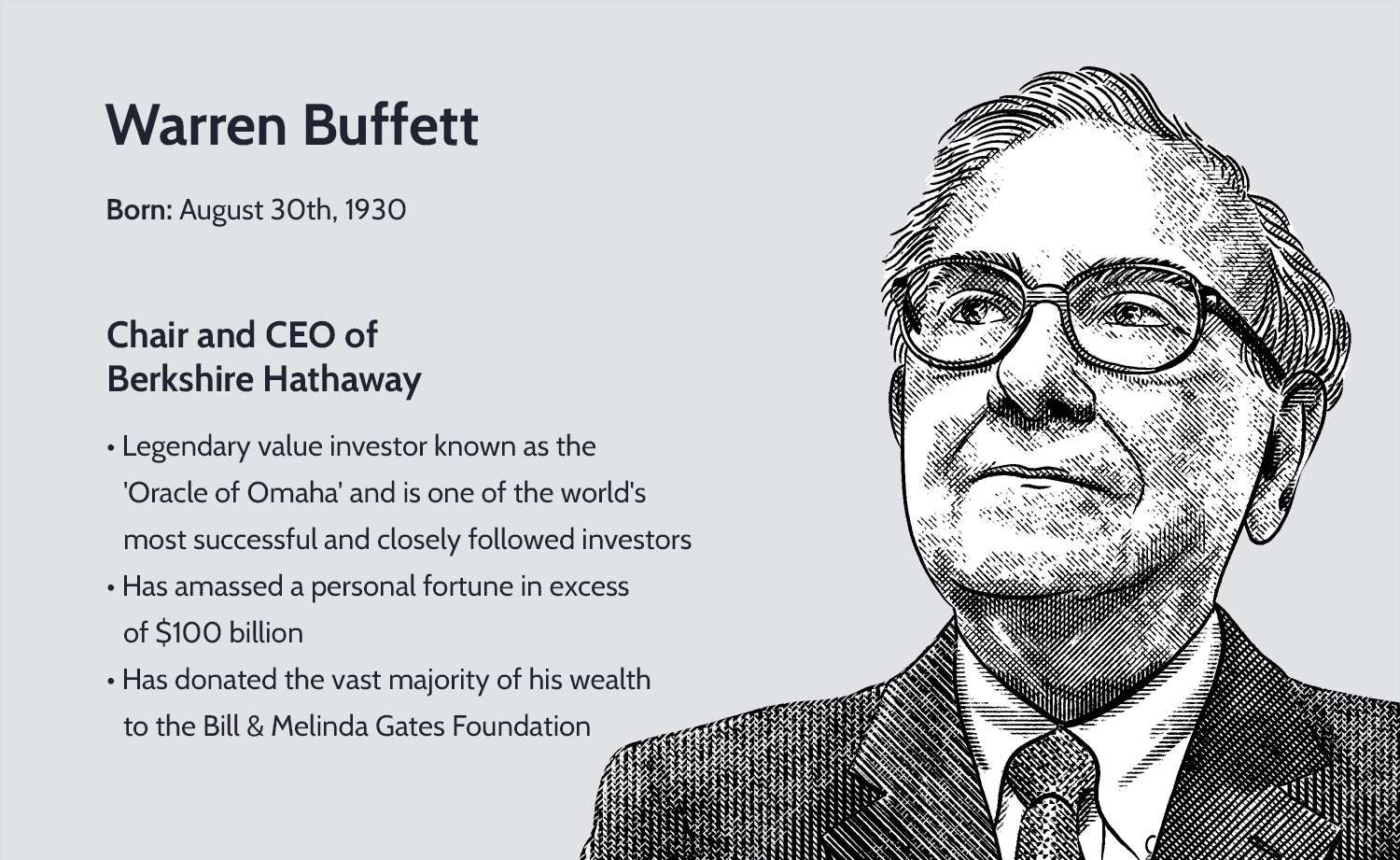
Warren Buffett has turned down more business opportunities than most investors will ever encounter. During the technology boom of the late 1990s, while others were making fortunes, he chose not to invest. He watched dot-com companies increase in value tenfold, twentyfold, even fiftyfold, and still stayed on the sidelines.
When the crash came, and many of those fortunes disappeared, Buffett was asked why he had stayed out of the boom. His answer was characteristically simple: he did not understand the businesses well enough to know what they were worth, and he was unwilling to invest in something he did not understand.
That discipline, practiced consistently for more than six decades, has produced one of the greatest investment records in history.
Most founders and investors know Buffett's name. Far fewer understand the framework behind the decisions that built that record. This post breaks it down.
Before we begin, one thing is worth saying. I am not a Buffett devotee who believes his framework applies to every situation. There are real limits to how well it translates to early-stage startups, African markets, and businesses where network effects matter more than durable competitive advantages.
What makes Buffett's approach valuable is not that it should be copied without question. It is that the reasoning behind his decisions is among the clearest thinking on decision-making ever put into writing. Whether or not you apply his framework exactly as he does, the questions he asks are worth learning.
Written by
Chris Awoke
Chris Awoke is the founder and CEO of Wikrena Limited, a data education and AI company that builds the skills and systems African professionals and organisations need to make better decisions. Brenxa is his personal project, built to help founders, investors, and executives think through their most important decisions with the structured rigour of the world's best thinkers.
Before looking at the questions Buffett asks, it helps to understand the principle behind them. The framework only makes sense once you understand what it is designed to protect.
Most people evaluate opportunities by asking, How much could I gain if this goes right?
Buffett starts somewhere else. He asks, What is the worst realistic outcome if everything I believe about this turns out to be wrong? Then he asks a second question: Can I survive that outcome?
This is not pessimism. It is what Buffett calls the margin of safety: the gap between what you pay for something and what it is actually worth. The wider that gap, the more room you have to be wrong and still succeed. The narrower it is, the more everything has to go exactly as planned.
That single idea sits beneath almost every major decision Buffett has made. It is why he invests only in businesses he understands, why he is willing to hold cash for years, and why saying no is one of his greatest competitive advantages.
The framework is not about finding extraordinary opportunities. It is about avoiding irreversible mistakes.
The five questions Buffett actually asks
These questions are drawn from decades of Berkshire Hathaway shareholder letters, interviews, and Buffett's own writing. Together, they form the framework he applies to every significant investment decision.
Question 1: Do I understand this business well enough to predict its economics ten years from now?
This is the circle of competence question, and it comes first for a reason. If the answer is no, nothing else matters. Buffett does not evaluate businesses he cannot understand. He simply moves on.
That sounds straightforward, but it is remarkably difficult to apply honestly. Most people mistake familiarity for understanding. They know the product. They know the market. They have read the pitch deck. Buffett asks something much harder: Can you predict, with reasonable confidence, what this business will look like in ten years? Can you estimate its revenues, margins, and competitive position? If not, you do not understand it well enough.
For founders, this question extends far beyond investing. Before expanding into a new market, can you predict what that market's economics will look like in five years? Before building a new product, can you explain why customers will still want it by the time it is finished?
Question 2: Does this business have a durable competitive advantage?
Buffett calls it a moat: the protective barrier that keeps competitors from taking a business's customers, market share, and profits. He is interested in advantages that are structural, not temporary.
Competitive advantages take many forms: trusted brands, network effects, switching costs, cost advantages, or regulations that make competition difficult. What matters is not whether the business is winning today, but whether it is likely to keep winning ten years from now.
Many businesses are profitable for a season before competition catches up. Buffett is looking for the rare businesses whose advantages become difficult, or even impossible, to replicate.
Question 3: Is the business run by managers who think like owners?
Buffett pays close attention to how managers allocate capital because, over time, those decisions determine whether shareholders become wealthier or poorer.
He looks for leaders who are honest about mistakes, communicate without spin, and invest the company's money as carefully as they would their own. Integrity, in Buffett's view, is not optional. Brilliant managers without integrity are more dangerous than average managers with it.
The same principle applies to founders choosing partners or hiring senior leaders. How someone talks about past failures often tells you more about their judgment than how they talk about past successes.
Question 4: What is the business worth, and what am I being asked to pay?
This is where Buffett estimates a business's intrinsic value. He is looking for situations where the price is meaningfully below the business's actual value. That difference is the margin of safety.
Estimating value is never perfectly precise. Buffett is not looking for certainty. He is looking for enough of a gap between price and value that mistakes in his assumptions are unlikely to become catastrophic.
That is why he is so patient. He does not chase great businesses at any price. He waits until a business he understands is available at a price that gives him a meaningful margin of safety.
Most founders are not buying companies, but the principle still applies. What is this opportunity actually worth? What will it cost in time, money, attention, and focus? And is the gap wide enough that you can be wrong about some of your assumptions and still come out ahead?
Question 5: What would have to be true for this to be a catastrophically bad decision?
This is the pre-mortem question, and it is the one most people avoid because it forces them to confront uncomfortable possibilities.
Before committing, Buffett imagines the worst realistic outcome, not the most likely one. Then he asks a simple question: Could I survive it?
If the answer is no, he walks away, regardless of how attractive the upside appears. Protecting the ability to keep playing the game matters more than winning any single opportunity.
What founders can actually do with this
The Buffett framework was built for investing, but its underlying logic applies to almost every important decision a founder makes.
Expanding into a new market: Do you understand the market well enough to predict its economics? Do you have a durable advantage, or are you relying solely on execution? If the expansion fails, can the business absorb the loss?
Hiring a senior leader: Does this person think like an owner? Have they been honest about past failures? Are you paying for proven capability or betting on future potential?
Raising capital: Do you understand what you are giving up well enough to estimate its value years from now? Have you considered what your cap table looks like under different outcomes? If this turns out to be the wrong investor or the wrong terms, can the business recover?
The questions change. The logic does not.
Understand the economics. Think honestly about the downside. Move forward only when you have enough room to be wrong.
The hardest part of applying this framework
The hardest part is not the analysis. Once you understand the framework, the analysis is relatively straightforward.
The hardest part is saying no.
Most founders are wired to say yes. They build companies because they believe something can work when most people think it cannot. That optimism is a genuine strength. It is also a liability when it makes every opportunity look too good to ignore.
Buffett has often suggested that great investors are defined less by the number of good decisions they make than by the number of bad decisions they avoid. The discipline to pass on attractive opportunities, to wait instead of rushing, and to protect capital rather than deploy it simply because it is available is one of the rarest skills in business.
I suspect this is the lesson most founders, myself included, learn the slow way. Saying no can feel like fear. It can feel like a lack of ambition or a missed opportunity. The real challenge is learning to distinguish hesitation born from fear from discipline grounded in sound judgment.
One question to ask before your next significant decision
Of all the questions in Buffett's framework, the one I return to most often is the simplest:
What would have to be true for this to become a catastrophically bad decision?
Not a setback. Not an expensive lesson. A decision that would take years to recover from, or one you might never recover from at all.
If you cannot answer that question clearly, you probably have not thought the decision through deeply enough.
If you can answer it, ask one more question: What have I done to prevent that outcome?
Good judgment is rarely the result of one brilliant decision. It is built by consistently avoiding the decisions that could have ended the game.